
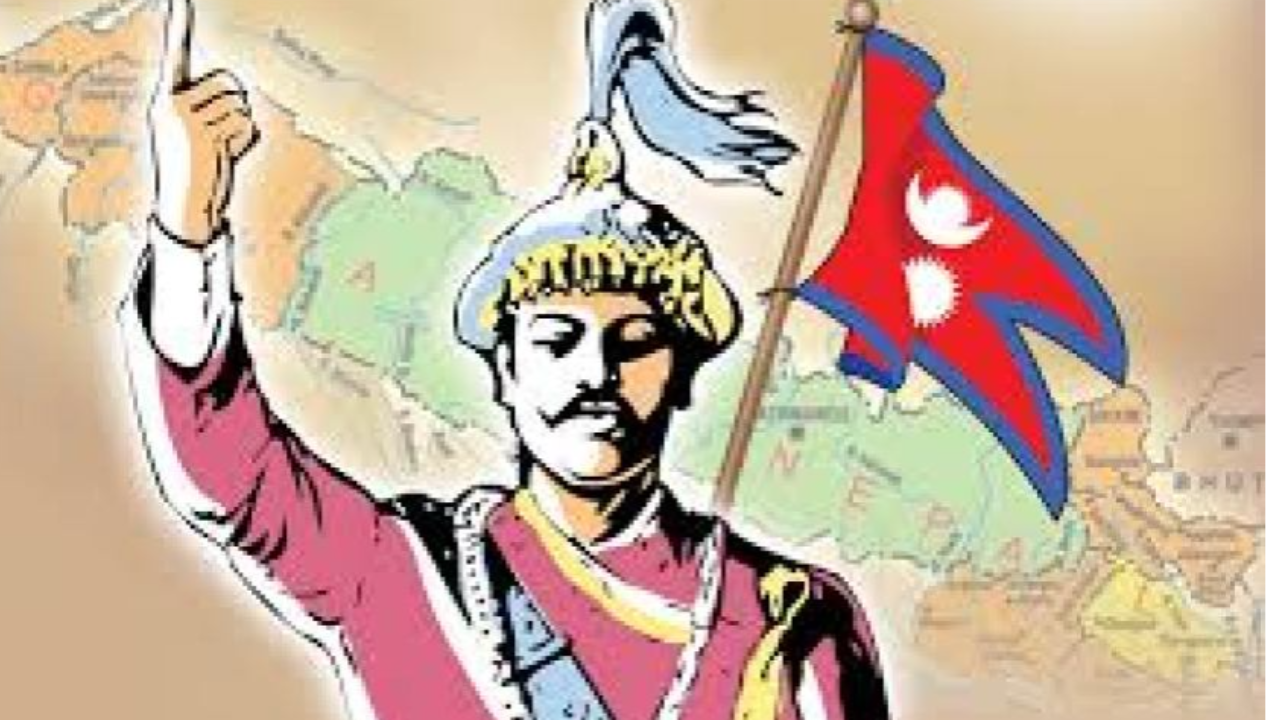
How did a small, impoverished kingdom like Gorkha defeat the wealthy Malla confederacy and even repel the British East India Company? The answer lies in the military genius of Prithvi Narayan Shah. He was centuries ahead of his time in understanding Asymmetric Warfare and Geopolitics.
1. The Economic Blockade
Shah knew he couldn’t simply outspend the rich Kathmandu kings. Instead, he strangled them. He conquered the surrounding hills (Nuwakot, Makwanpur, Dhulikhel) to control the trade routes to Tibet and India. By cutting off the supply of salt and cotton to the valley, he weakened the resolve of the Malla kings long before his soldiers breached their gates.
2. Modernizing the Arsenal
While other hill kings fought with traditional swords and arrows, Shah recognized the changing tide of war. He traveled to India to procure flintlock muskets. More importantly, after defeating the British expedition led by Captain Kinloch in Sindhuli (1767), he captured hundreds of modern British rifles and incorporated them into his army.
3. The “Yam Between Two Stones”
Perhaps his greatest strategic insight was diplomatic. He realized Nepal was sandwiched between two giants: the Qing Empire in China and the rising British power in India.
- He advised a policy of non-alignment, famously calling Nepal a “Yam between two boulders.”
- He maintained friendship with the Chinese to deter the British and vice versa, a neutral foreign policy that kept Nepal sovereign while the rest of South Asia fell to colonialism.
Key Takeaway: Prithvi Narayan Shah teaches us that strategy is superior to brute force. By understanding his terrain and his enemies, he turned Gorkha’s weaknesses into its greatest strengths.