
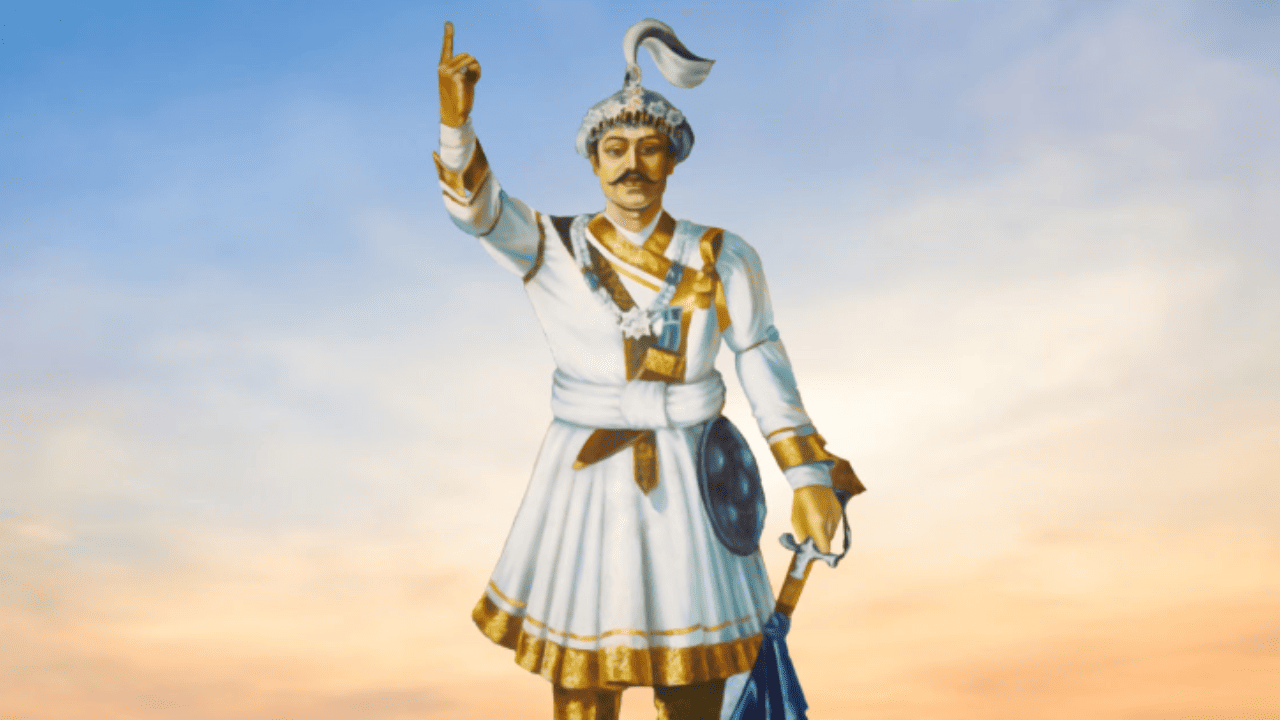
In the mid-18th century, the Himalayas were not home to a single unified nation, but rather a fragmented collection of over 50 warring principalities. To the west were the Baise and Chaubise rajyas; to the east, the Sen kingdoms; and in the center lay the prosperous Kathmandu Valley, split among three Malla kings.
Into this chaotic landscape was born a man who would change the map of South Asia forever: Prithvi Narayan Shah.
The Dream of a King
Born in 1723 in the small hill kingdom of Gorkha, Prithvi Narayan ascended the throne at the young age of 20. Unlike his contemporaries, who were content with petty squabbles, Shah possessed a burning ambition: Unification. He looked down from the hills of Chandragiri at the fertile Kathmandu Valley and saw not just wealth, but the heart of a future nation.
Persistence in the Face of Defeat
His journey was not easy. His early attempts to expand were met with crushing failure.
- Nuwakot: His first invasion of the strategic trade route of Nuwakot failed. He didn’t give up; instead, he went to Banaras to acquire better weapons and study the geopolitical landscape. He returned and conquered Nuwakot in 1744.
- The Battle of Kirtipur: Perhaps his most brutal lesson came at Kirtipur, where he was defeated twice. In one battle, he famously lost his most trusted General, Kalu Pande, and barely escaped with his own life.
The Birth of Modern Nepal
Through sheer grit, he eventually encircled the Kathmandu Valley. On the day of the Indra Jatra festival in 1768, while the people of Kathmandu were celebrating, the Gorkhali troops marched in. He took the city without a massive bloodbath, signaling the end of the Malla era and the birth of modern Nepal.
Key Takeaway: Prithvi Narayan Shah was not just a conqueror; he was a resilient leader who understood that great visions require the patience to endure great failures.